
If we need a very large temporary structure, are we still talking about something practical and proven, or does it start becoming too big to be a realistic long-term solution?
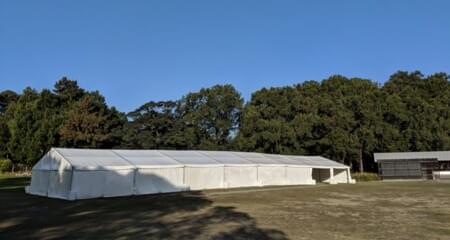
Yes, these structures can absolutely be used for 500sqm and larger long-term projects, and that is something we already have real experience with. Once the marquee is properly engineered, installed, and matched to the site, it becomes practical operational space rather than an oversized temporary compromise.
What really changes once a project reaches 500sqm or more?
The main difference is that the marquee stops being thought of as “extra cover” and starts being treated as actual infrastructure.
At this size, the structure is usually being used for things like:
- warehouse overflow
- logistics support
- loading and unloading operations
- maintenance or workshop activity
- major temporary retail or operational expansion
That means the client is not just asking for a big marquee. They are asking for additional space that has to work day after day, often for months at a time, as part of a real business operation.
That changes the nature of the project. The structure still needs to be modular and quick to install, but now the planning around access, engineering, internal use, safety, and long-term practicality becomes even more important.
Have you actually delivered projects at this scale before?
Yes, and that is one of the biggest reasons clients feel comfortable using us for this type of work.
We have already been involved in larger long-term projects including:
- a 900sqm marquee for Coca-Cola in Melbourne for around 9 months
- large marquee supply for Coles logistics facilities across Queensland, Victoria, and New South Wales
- ongoing large structures for Siemens maintenance operations in Queensland
- large quoted projects for IKEA
Those examples matter because they show the scale is not theoretical. The structures have already been used in real commercial environments where they had to perform over time, not just look convincing during a sales conversation.
For Segment 2 clients, that sort of proof matters. They want to know that the supplier understands how these structures behave in long-term operational use, not just in short event scenarios.
What makes a large marquee practical at that size?
Mainly the modular system and the engineering behind it.
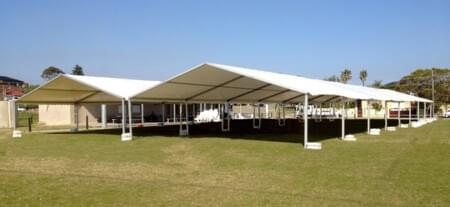
The frame systems are designed so that the structure can be configured into large footprints without becoming unmanageable from a planning point of view. Widths such as 10m, 15m, and 20m can be combined with longer modular runs in 5 metre sections, which allows large overall footprints to be created while still keeping the install process efficient.
The other key part is strength. These larger structures use heavy-duty aluminium frames, durable PVC covers, and proper anchoring or ballast methods. That gives them the stability required for long-term commercial use rather than just short-term cover.
The real test, though, is not whether they are large. It is whether they remain practical once staff, stock, equipment, and vehicles are using the space every day. That is why the internal function of the structure matters just as much as its size.
Do larger projects create more complexity?
Naturally, yes. But that does not mean they become unrealistic.
At 500sqm and above, the client usually needs more thought around:
- door and access configurations
- internal clearance
- ballast or anchor requirements
- site movement
- permit and engineering pathways
- how the marquee interacts with the current operation
That is why large projects need more than just a structure supply. They need proper planning support. We work through those details with the client before the build begins so the final result is not just “big enough,” but actually useful and compliant.
Can large structures still be flexible later?
Yes, and that remains one of their strongest advantages. Even at this scale, the modular system often allows the structure to be extended, reduced, or reconfigured later if the project changes. That flexibility is something permanent construction does not offer nearly as easily.
For businesses working through changing logistics needs, seasonal capacity, or uncertain long-term demand, that flexibility can be just as valuable as the structure itself.
Once these structures are engineered and installed at 500sqm and beyond, they stop feeling like oversized temporary cover and start functioning as real additional business space. That is why so many larger clients use them when they need practical, scalable room quickly.