
If the project grows after the marquee is already installed, are we stuck with the original footprint or can the structure actually expand with the operation?
Yes, in most cases the structure can be extended later, and that flexibility is one of the main reasons businesses choose modular warehouse marquee hire in the first place. The client is not locked forever into the original size if the project changes, the stock volume increases, or the operational demand turns out to be larger than first expected.
Why is flexibility on size so important in long-term projects?
Because long-term commercial projects rarely stay exactly the same from beginning to end.
At the start of a project, the client usually has a very good idea of what they need. But there is still a difference between planning a project and living with it once the operation starts running. Once stock starts moving, staff start working inside the structure, or extra equipment begins arriving, clients sometimes realise:
- they need more room than expected
- they want separate areas for different operational functions
- the loading flow would work better with additional covered space
- more storage would remove pressure elsewhere on the site
This is extremely common in warehousing, logistics, retail overflow, and industrial support work. That is exactly why modular structures make so much sense. They leave room for the project to evolve instead of forcing the client to get every square metre perfect on day one.
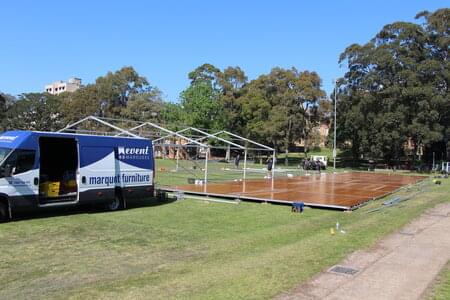
How does the extension actually work?
Because the structure is modular, it can usually be lengthened in repeatable sections, most commonly in 5 metre increments.
So, for example, a structure that begins as:
- 15m x 30m
can often later become:
- 15m x 40m
- 15m x 45m
- 15m x 50m
- 15m x 60m
depending on the site, stock availability, and project needs.
That modular logic is what makes these structures commercially useful. It means the client does not have to jump immediately to the largest possible footprint out of fear that they may need more later. They can start with a sensible size and still retain the option to expand if required.
That is a very different mindset from permanent construction or leased space, where the footprint decision is usually much harder to change once signed off.
How quickly can an extension be organised?
Usually quite quickly, especially compared with any permanent building alternative.
Because we hold large stocks of modular structure components and operate from multiple locations, we can often respond quickly when a client needs an extension. Depending on the scale of the change and the location, an extension can sometimes be organised within a day or two.
That matters because businesses usually do not discover they need more space in a calm, leisurely way. More often, the need appears when the site is already under pressure. If the structure can respond quickly, then the marquee keeps delivering value as a practical commercial solution rather than becoming another thing that is too slow to help.
Can the structure also be reduced later if needed?
Often yes.
This is another part of the flexibility that clients appreciate. If the original marquee turns out to be larger than necessary, or if the operational need changes later in the project, it may be possible to reduce the footprint as well. That is one of the reasons these structures suit uncertain or project-based business demands so well.
Some clients need more space urgently, then settle into a more efficient layout and no longer require the entire original footprint. Others find that the best solution is not extending the existing marquee in a straight line, but adding a second smaller structure for a specific purpose such as:
- loading
- staff movement
- equipment separation
- workshop use
We always look at what makes the most operational sense rather than assuming one answer fits every project.
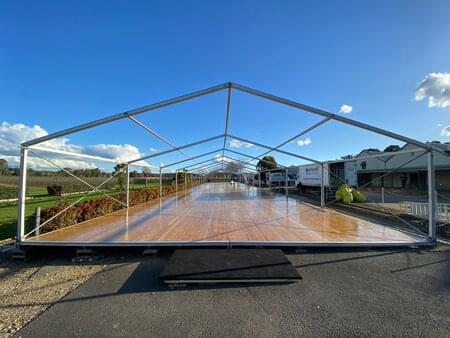
What has to be considered before extending a marquee?
Usually:
- whether the site has enough room
- whether access routes remain clear
- whether the current anchoring or ballast arrangement needs adjustment
- whether the client’s use has changed enough that doors, walls, or access points also need to change
- whether the structure is still in the right place or whether a second marquee would work better
This is why we do not treat extensions as just “adding a few more bays.” Technically that may be true, but practically the extension should also suit how the business is now using the space. Sometimes the marquee needs to grow. Sometimes the workflow needs to improve. Sometimes both are true.
Why is this better than overcommitting at the start?
Because it lets the client make a better commercial decision.
If a client is unsure whether they need 30 metres or 50 metres of length from day one, over-ordering can be expensive and inefficient. Under-ordering can create pressure. Modular hire gives them a middle ground. They can start with a sensible footprint and know they still have room to move.
That tends to create more confidence in the original booking as well, because the client is not being asked to predict the future with perfect accuracy.
The ability to extend later is not just a technical feature. It is one of the biggest commercial strengths of long-term modular marquee hire. It means the structure can grow with the project instead of forcing the client to treat the first decision as fixed forever.