
What if the setup takes too long and starts pushing the whole event behind schedule — how do we know installation will actually be finished when it needs to be?
Installation time depends on the size and complexity of the event, but the more important thing is that it is planned accurately and delivered on time. We build our setup process around the client’s schedule, not the other way around.
What usually affects installation time the most?
Mainly:
- structure size
- type of marquee
- site access
- flooring requirements
- staging
- lighting
- whether the site is straightforward or restricted
A simple activation marquee with basic furniture and lighting can be done quite quickly. A larger event with wooden flooring, staging, chandeliers, fencing, pallet lounges, operational zones, and difficult access obviously takes longer.
The key is not pretending all setups take the same amount of time. The key is understanding what is involved and planning realistically from the start.
How do you work out setup timing for a job?
We usually work backwards from the event schedule.
That means looking at:
- when the site is available
- when other suppliers need access
- what the client needs ready first
- how long each component takes to install
If the site is restricted, if access is tight, or if the event includes multiple structures, that all gets built into the timing plan.
That is how we avoid late starts and on-site panic. The schedule is not something we think about after the quote. It is part of the job from the beginning.
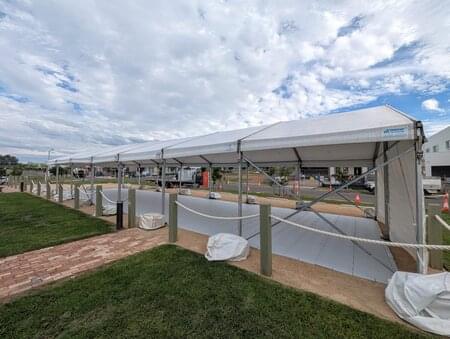
Does flooring change installation time much?
Yes, especially wooden flooring.
Our wooden floor system is more involved because it sits on a subframe, can accommodate gentle slopes, and creates a premium elevated event surface. It takes longer than simply dropping furniture into a structure, but it also changes the event dramatically in terms of comfort, function, and finish.
PVC event flooring is usually faster and more practical for some corporate events, especially where cable runs, heavier loads, or operational efficiency matter more than a premium finish.
We help the client weigh those differences up rather than assuming one option suits every job.
What about staging and lighting?
They matter a lot.
Staging needs to be:
- positioned correctly
- level
- safe
- integrated with the rest of the layout
Lighting also changes install time depending on the complexity. Chandeliers, festoon lighting, LED strings, and wider site lighting all take planning and proper setup. If the event runs into the evening, lighting is not just visual. It is also part of safety and public usability.
This is why detailed event schedules matter. The “marquee install” is often not just the marquee.
Can difficult sites slow things down?
Yes, but that is not necessarily a problem if it has been planned properly.
Restricted access, heritage conditions, island logistics, manual transport, or sloping ground can all change the setup time. We account for that when we plan the job. If more crew are needed, we bring more crew. If the sequence needs to change, we adjust the sequence.
The real issue is not whether a difficult site takes longer. It is whether the supplier knew that early enough to keep the event on track.
How do you make sure you still finish on time?
By taking timing seriously from the start.
We are very aware that if our setup runs late, the pressure rolls downhill into the rest of the event. So we build our process around:
- realistic timing
- the right crew size
- proper scheduling
- clear communication with the client
That is one of the reasons so many repeat clients say we are easy to work with. We do not create uncertainty around install. We tell them what the job needs and then we deliver to it.
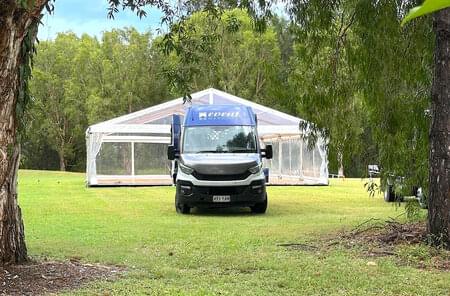
Does this apply across all three cities?
Yes.
Whether the client is using:
- Sydney marquee hire
- Melbourne marquee hire
- Gold Coast marquee hire
the process stays the same. The equipment may vary slightly job to job, the site conditions may change, but the standard is the same: plan properly, install properly, finish on time.
Installation time matters, but what matters more is confidence in the schedule. Clients should not be left hoping the setup will somehow come together. They should know when it will be ready.