
We are worried we will miss something important before the marquee installation starts, so what do we actually need to prepare to make the setup smooth and stress free?
You usually do not need to overprepare, but there are a few important things that make a big difference, especially site access, the exact marquee location, supplier coordination, and any details about the ground or venue that the installation team needs to know in advance. The goal is not to do the marquee company’s job for them, but to make sure the team can arrive, get started properly, and build the wedding space without avoidable delays.
Do we need to have everything perfectly organised before the marquee team arrives?
Not perfectly, no. That is one of the first things couples should hear, because marquee weddings can start to feel overwhelming when people imagine there must be a giant checklist they are somehow going to miss. In reality, you do not need to become a marquee installer or event site manager overnight. A professional marquee company should be guiding a lot of this and asking the right questions well before trucks arrive.
What does help is having the key decisions already clear. The team should know where the marquee is going, how they are getting to the setup area, whether there are any restrictions on timing or access, and what other suppliers are working around the installation. Once those basics are sorted, most of the rest becomes much easier.
So no, you do not need everything perfect. But you do want the practical foundations in place. The better the access, communication, and site information are before installation starts, the smoother the whole setup usually feels.
What is the most important thing to prepare before installation day?
Usually, it is the site itself, or more specifically, making sure the marquee team knows exactly where they are going and what they are working with. That sounds basic, but it is one of the biggest factors in whether setup feels efficient or chaotic.
It also helps to think about the surrounding area, not just the marquee footprint itself. Is there enough room for the install team to unload? Are there trees, gardens, retaining walls, fences, or pathways that affect how materials move in? Is the area still in the same condition as when it was first quoted? If recent rain has softened the ground, or if landscaping has changed, that is worth mentioning.
The most helpful thing couples can do is make sure the team is not arriving blind. They should know what site they are walking into, where the marquee is going, and whether there is anything unusual they need to plan around. That one piece of preparation usually makes a bigger difference than anything else.
Do we need to organise vehicle access for the marquee crew?
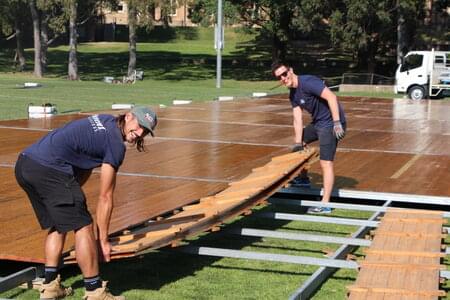
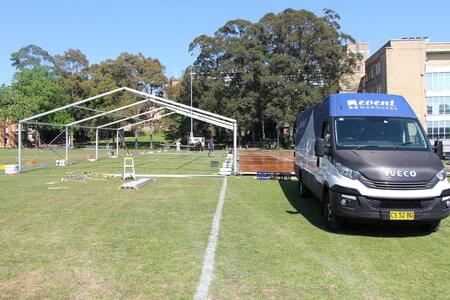
Yes, definitely, and this is one of the most practical things to sort out early. Marquee installation is not just a matter of one small van pulling up and unloading a few boxes. Depending on the structure, the flooring, and what else is included, the team may arrive with trucks, trailers, and a fair bit of equipment. If vehicle access is not properly thought through, the whole setup can become harder than it needs to be.
That does not mean the trucks must be able to park right beside the final marquee position. Many wedding sites, especially private properties, gardens, and regional venues, have some level of access challenge. Experienced marquee teams are used to that. But they do need to know in advance what the situation is.
If there are narrow gates, soft ground, long carry distances, low-hanging trees, restricted driveways, or limited turning space, that should be discussed before installation day. The same goes for venues that have timing restrictions, shared access areas, or rules about where heavy vehicles can and cannot go.
So yes, vehicle access matters a lot. It is one of those details that can quietly make the whole install smooth when handled well, or unexpectedly messy if ignored.
What should we tell the marquee company about the ground and site conditions?
Anything that could affect installation, anchoring, flooring, or general site safety is worth mentioning. This is especially important for private property weddings, because the ground may look simple at first glance but still have practical issues that matter once the team is actually setting up.
For example, if the site is sloped, soft, recently landscaped, very wet, or unusually firm, say so. If there are underground services, irrigation lines, septic areas, sensitive garden beds, or anything else that affects where the marquee can safely go, that should also be flagged early. The more the team knows, the more accurately they can plan the setup.
In most cases, the more upfront couples are about the site, the smoother the installation ends up being. Practical honesty saves time.
Do we need to coordinate the marquee installation with our other wedding suppliers?
Yes, and this can make a huge difference to how calm the whole lead-up feels. A marquee wedding usually involves several moving parts, florists, furniture hire, caterers, planners, lighting teams, stylists, AV people, photographers doing site checks, maybe even bands or DJs testing access. If the marquee installation is not coordinated with those other suppliers, the setup window can start to feel crowded very quickly.
For example, florists generally cannot do much inside the main marquee until the structure is up. Furniture placement is easier once flooring and walls are finalised. Caterers need to understand access. Lighting teams may need to wait until the structure is complete before doing the final part of their work. When that sequencing is clear, the site feels organised rather than frantic.
Should we prepare the exact marquee layout before installation starts?
To a point, yes. You do not need every chair position marked out on the grass, but the main layout thinking should already be done. That means the marquee company should know what type of wedding setup you are aiming for and what needs to fit inside the structure.
For example, are you planning round dining tables or long tables? Will there be a bridal table? Is there a dance floor inside the marquee? Will the bar be inside or outside? Are you adding lounge furniture, gift tables, a cake display, or a band setup? These decisions all affect not just the size of the marquee, but how the space needs to function once it is built.
A good marquee supplier should already be talking through these layout elements during quoting and planning. The more clearly they understand the internal use of the space, the better they can position the marquee and recommend the right structure, flooring, and access points.
So no, you do not need to fully stage the wedding in advance. But yes, the major layout choices should be known before installation starts. It helps the marquee become the right venue from the beginning instead of needing to be forced into shape later.
Do we need to be there when the marquee team arrives?
Usually it helps if someone responsible is available at the beginning, even if they do not stay there the whole time. That could be the couple, a planner, a venue contact, a family member, or someone else who understands the site and has authority to answer practical questions if they come up.
In many cases, the setup will run smoothly without much input once the team gets going. But there are still good reasons for having someone available at the start. They can confirm access, help with any final site clarification, and make sure the crew is in the right place if the property is large or the marquee area is not immediately obvious.
This becomes more important on private properties, rural venues, or sites where there are multiple possible setup areas. If the marquee team arrives and no one is around, even simple things can become frustrating. Which gate should they use? Is this definitely the right paddock or lawn area? Has anything changed since the last site visit? Those are easy questions to solve if the right person is contactable. Much harder if not.
What should we avoid doing before the marquee installation?
The biggest thing to avoid is changing important details at the last minute without telling the supplier. That can include moving the marquee location, changing the layout significantly, adding major hire items late, or assuming the crew can just work around unexpected obstacles on the day. Sometimes changes are possible, but they need to be discussed early, not sprung on the install team as trucks are unloading.
Another mistake is assuming weather or ground changes do not matter. If there has been heavy rain, if the ground is softer than expected, or if access has changed, it is worth saying so. Good marquee teams can usually adapt, but only if they know what they are adapting to.
And finally, try not to leave every practical decision to the very last minute. The smoother marquee weddings are usually the ones where the important choices, site position, layout, access, timing, supplier sequencing, have already been discussed properly before installation day arrives.
So what do we actually need to prepare before the marquee team arrives?
In simple terms, you need the important practical details sorted rather than every tiny detail of the wedding solved. The marquee location should be confirmed. Vehicle access should be understood. The site conditions should be accurately described. Other suppliers should know the installation timing. And someone responsible should be available at the start in case questions come up.
That is really the difference between a stressful setup and a smooth one. Not perfection. Just good preparation, honest communication, and a marquee company that knows how to guide the process.
When those things are in place, the installation becomes what it should be, one important step toward the wedding coming together, not a drama of its own.