
What if the site has bad access, protected surfaces, tight rules, or awkward terrain — is the installation still realistic or is it likely to become a headache?
Yes, it can still be realistic, and quite often it is. Difficult sites do not usually become a problem because they are impossible. They become a problem when the supplier has not planned them properly.
What actually counts as a difficult site?
Usually one or more of these:
- no direct vehicle access
- narrow or restricted access paths
- heritage conditions
- sloping or uneven ground
- protected surfaces
- public or government-managed locations
- tight city sites with strict bump-in windows
We have worked on harbour island jobs where equipment had to move by boat, and on premium and heritage sites where extra care was required because of what was on the ground or around the event area. That sort of work changes the method, but it does not automatically mean the event cannot happen.
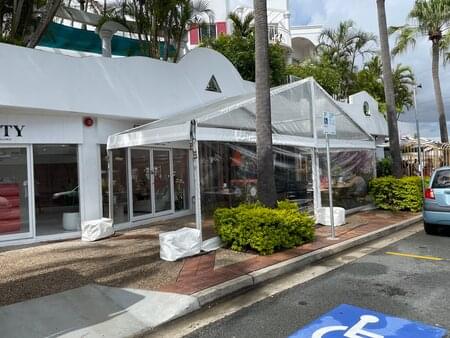
How do you deal with limited access?
By being prepared to work differently.
We do not rely on forklifts to make our jobs possible. If equipment needs to be moved manually, our crews are used to that. If a site requires more labour, a different bump-in plan, or tighter sequencing, we adjust.
That matters on sites where many suppliers would immediately treat access limitations as a dealbreaker. For us, it is more often a planning issue than a reason not to proceed.
What about sloped ground or uneven areas?
This depends on the type of structure and whether flooring is being used.
Our wooden flooring system is especially useful here because it can sit on a subframe and create a more level finished surface on gentle slopes. That can make difficult sites far more practical and much safer for guests, staff, and suppliers. It also improves comfort dramatically compared to leaving people on uneven ground.
Where the site is tight on space, pavilion marquees tend to be more flexible than Hampton tents because Hampton tents need additional room for ropes and anchoring around the perimeter. That is one of the reasons we guide clients on both size and structure type, not just one or the other.
How do you protect sensitive or premium sites?
By thinking about the site as part of the event, not just a place to put equipment.
That includes:
- choosing the right anchoring method
- protecting grass or surfaces with appropriate flooring
- planning access routes
- minimising unnecessary movement
- using separation items like picket fencing or artificial hedging where useful
This is especially important on golf courses, heritage sites, and premium venues where visual presentation and surface protection matter just as much as the event itself.
Do difficult sites change installation timelines?
Sometimes, yes.
If the site needs boat transport, manual movement, or stricter sequencing, it is only sensible to allow for that in the schedule. What matters is not pretending it will take the same amount of time as a simple open paddock. What matters is planning it accurately and then delivering to that plan.
That is why we work through bump-in and bump-out carefully. We want the client to know what is involved and feel confident about how it will happen.
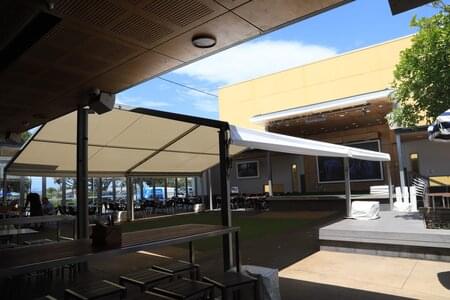
Why does experience matter so much on these jobs?
Because most of the value is in the judgement.
Anybody can say they are willing to install on a difficult site. The real question is whether they know how the restrictions affect:
- equipment choice
- crew size
- flooring
- schedule
- safety
- traffic flow
That is the difference between a difficult site being manageable and becoming a stressful mess.
Restricted sites are rarely about whether something can be done at all. They are about whether the supplier understands how to adapt the event setup to the site properly.
That is the part we focus on.