
What if we already have an agency, production manager, or event team involved — will adding another supplier make things harder instead of easier?
No, not if the supplier understands how event teams actually work. We regularly work with agencies and production crews, and the whole point is to slot into their process cleanly so the event becomes easier to deliver, not more complicated.
How do you usually work with agencies and production teams?
Usually as part of a bigger moving system.
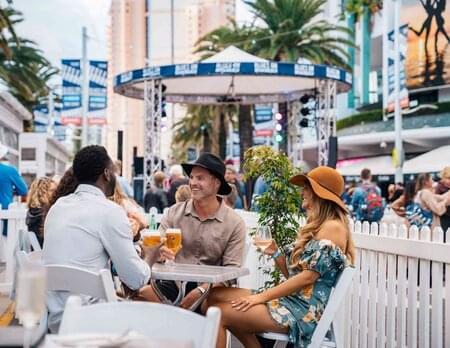
The agency may be leading creative and client management. The production team may be handling run sheets, build schedules, and supplier coordination. AV is managing technical delivery. Styling is handling finishes. Our role is to make sure the marquee, flooring, lighting, staging, furniture, fencing, and operational structures all fit into that picture properly.
We do not treat ourselves like a separate island in the process. We meet, discuss, review plans, and make sure what we are doing aligns with the timing and technical reality of the event. That matters because events go wrong most often in the gaps between suppliers, not inside each individual supplier’s area.
Why does agency experience matter so much?
Because agencies are usually carrying pressure from both sides.
They are managing:
- the client’s expectations
- the venue’s restrictions
- the event schedule
- the supplier mix
- the visual standard of the job
So the last thing they need is a marquee supplier that is hard to reach, vague, defensive, or disorganised.
We understand that our part reflects on them. If our setup runs late, or our communication is poor, or our equipment turns up in average condition, it creates problems for the whole project and makes the agency look worse than they should. That is why we put so much emphasis on being easy to work with. Not “easy” in a lazy way. Easy in the sense that things are clear, direct, and dependable.
Do you communicate with other suppliers directly?
Yes, often.
That can include:
- AV teams
- caterers
- stylists
- site managers
- event producers
- venue operators
That direct contact is useful because it removes a lot of back-and-forth through the client. If a stage needs to sit a certain way for vision lines, if cables need to pass under PVC flooring, if a catering tent needs to be positioned closer to the main structure, those conversations are easier when the people involved can just talk to each other.
It also protects the client from becoming the middleman on technical things they should not have to interpret.
Does it help when the same crew works on repeat events?
Very much.
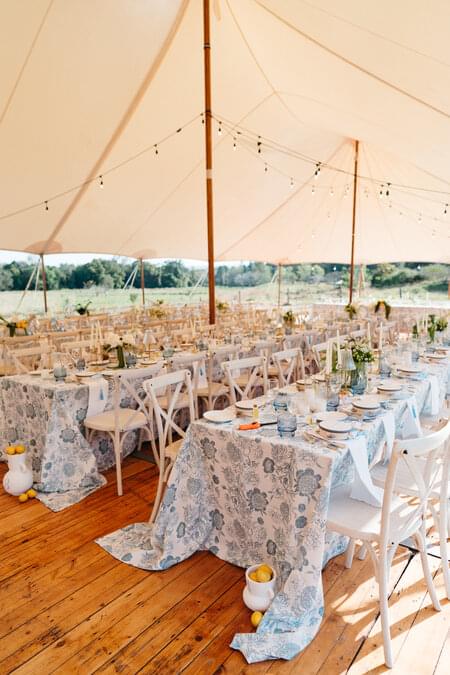
One of the reasons long-term clients stay with us is because they often end up dealing with the same key people repeatedly. That makes the whole process smoother. There is less explaining, less uncertainty, and more trust. Clients know how our team works, and our team understands how those clients like to deliver.
That consistency matters a lot for repeat campaigns across Sydney marquee hire, Melbourne marquee hire, and Gold Coast marquee hire, because clients are not having to reset the relationship in every city.
How do you handle high-end or sensitive sites with agency clients?
Carefully, and usually very collaboratively.
On premium venues, heritage locations, or sites with difficult bump-in conditions, we work through the detail early:
- access
- timelines
- protection of surfaces
- traffic flow
- what structures are realistic
- what flooring is appropriate
This is where things like our wooden flooring become important because it does not just create a polished event surface. It also helps protect grass and other sensitive areas, which matters a lot at premium sites.
Agencies usually appreciate when a supplier can think in those terms rather than just trying to push gear in and out quickly.
How do you help agencies stay on schedule?
By respecting the reality that their event schedule matters more than ours.
We work to the agreed timings, help build realistic install plans, and if the job is more complex, we talk about that honestly rather than pretending it will somehow just work out. If extra time, more crew, or different sequencing is needed, we say so early.
That is a much better outcome than giving a client a comforting answer at quote stage and then creating pressure on site later.
What is the biggest difference between working with you and a generic supplier?
Probably that we understand we are part of the client’s reputation.
We are not just renting out a pavilion marquee, clear roof marquee, Hampton tent, staging, festoon lighting, pallet furniture, fencing, or flooring. We are helping the client deliver an event that has to feel smooth and professional to the people paying for it.
That tends to change the way you behave.
Agencies and production teams do not need more complexity. They need suppliers who understand timing, communication, standards, and pressure.
That is the role we try to play.